



Article
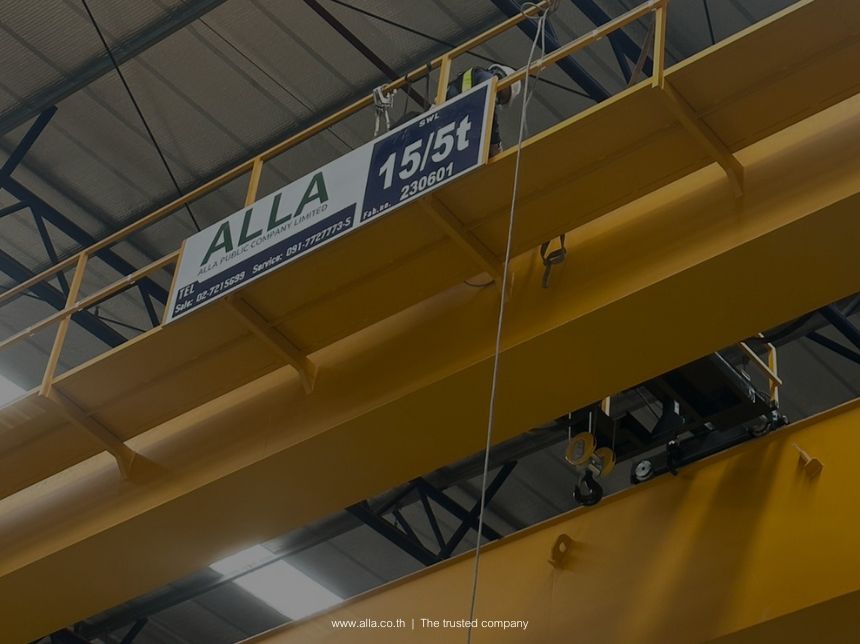
In-depth Guide industrial cranes : Types, Working Principles, and Cost-Effective Selection Techniques
In an era where production demands both speed and precision, industrial cranes are no longer just heavy-lifting machines. They are the “heart” of efficient workflows in factories. Choosing the right crane can significantly reduce production costs.
What is an Industrial Crane? (The Core Concept)
In simple terms, an industrial crane is a machine used to lift (hoist) and move (traverse/travel) heavy objects beyond the capability of human labor or forklifts, especially in limited spaces, with a focus on safety and time efficiency.
Basic Working Principles (How it Works)
Most cranes operate on three primary axes:
- Vertical Axis: Lifting and lowering via a hoist system
- Transverse Axis: Moving left and right along the crane beam using a trolley
- Longitudinal Axis: Traveling back and forth along the runway (bridge travel)
Popular Types of Cranes in 2026
- Overhead Crane: The top choice for indoor operations. It runs on rails attached to the building structure, maximizing floor space utilization.
- Gantry Crane: Equipped with its own legs and runs on ground rails. Ideal for outdoor applications or facilities without structural support for overhead systems.
- Jib Crane: The “workstation hero,” perfect for localized lifting tasks and feeding materials into machines quickly.
- Smart Crane: A growing trend in 2026, featuring anti-sway technology and tablet-based controls for enhanced precision and safety.
3 Steps to Choosing the Right Crane
- Capacity: Determine the maximum load required (recommended to add a 20% safety margin)
- Space: Accurately measure the span and maximum lifting height
- Duty Class: Define usage frequency (occasional use vs. continuous 24-hour operation requires different specifications)
Related posts
The Role of “Crane Hoists” in European Industrial Standards
In the global manufacturing and material handling sectors, crane hoists serve as critical [...]
Read more
Single Girder vs Double Girder Crane — What’s the Difference?
Single Girder vs Double Girder Crane — What’s the Difference? A Single Girder Crane has one main [...]
Read more
Crane Training: Why Is Annual Retraining Necessary? A Critical Issue Many Organizations Overlook
In industrial operations, crane usage is considered a high-risk activity. That’s why crane operator [...]
Read more
What Is the Difference Between a Crane and a Hoist?
In many factories, the terms “crane” and “hoist” are often used interchangeably.However, from an [...]
Read more